
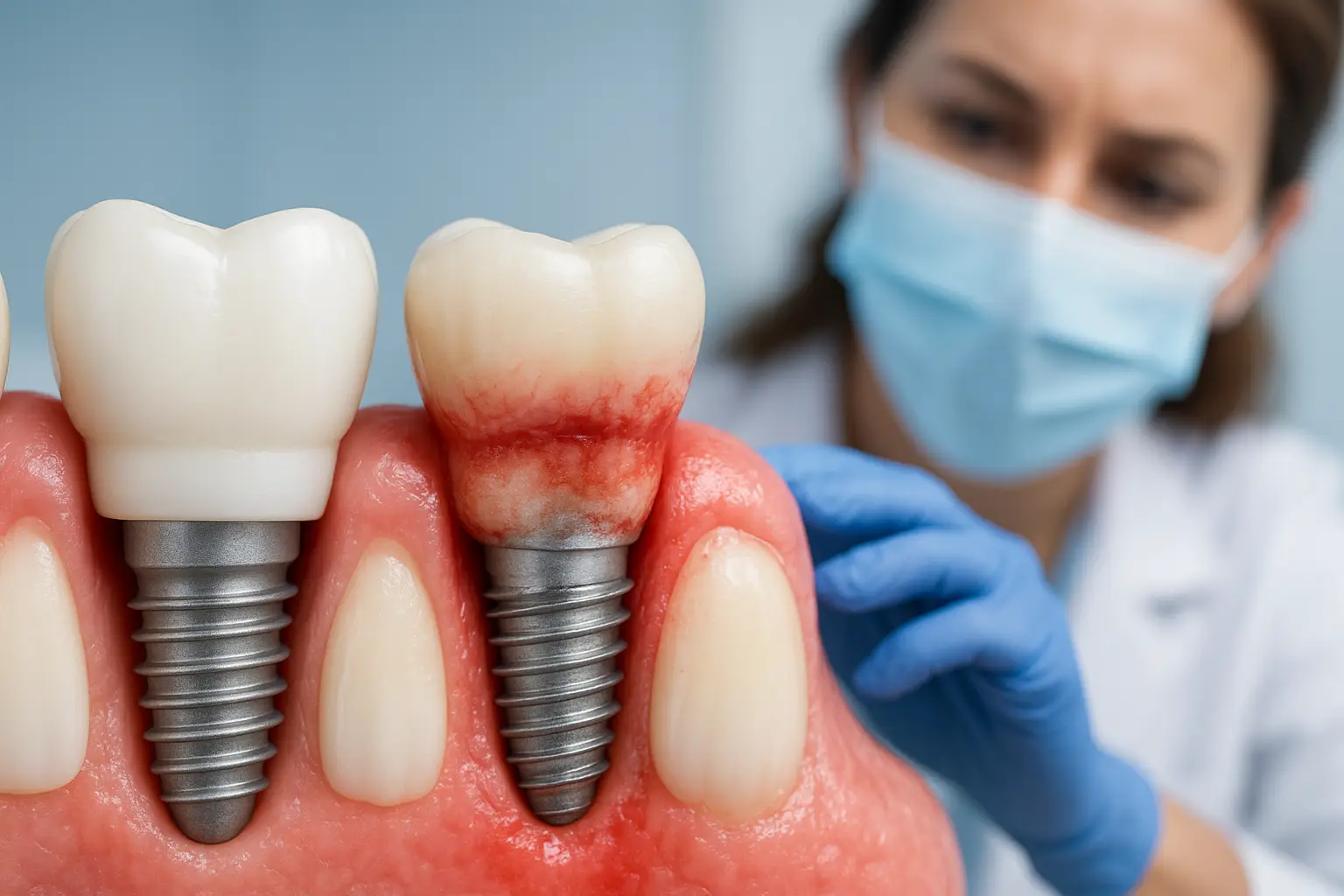
Dental implants are one of the most reliable ways to replace missing teeth, with success rates above 95%. However, even with advanced techniques and materials, dental implant failure can occur. Understanding the possible causes helps you protect your investment and maintain a healthy, long-lasting smile.
At Seaside Dental Care in Fort Myers, we help patients identify and prevent risk factors before and after implant treatment.
Common Causes of Dental Implant Failure
1. Poor Oral Hygiene
Bacteria can accumulate around an implant, leading to peri-implantitis, an infection that causes bone loss and loosening of the implant.
Tip: Brush and floss daily, and visit your West Palm Beach dentist for professional cleanings every 3–6 months.
2. Smoking
Nicotine restricts blood flow and delays healing, significantly increasing implant failure risk.
Tip: Avoid smoking before and after implant surgery for optimal healing.
3. Medications and Health Conditions
Certain medications and conditions can interfere with bone healing and implant integration:
- Proton Pump Inhibitors (PPIs): Reduce calcium absorption and weaken bone
- Methotrexate (MTX): May slow bone
- Selective Serotonin Reuptake Inhibitors (SSRIs): Can reduce bone
- Uncontrolled Diabetes: Slows healing and increases infection
- Bisphosphonates (osteoporosis drugs): May affect bone
Tip: Always share your medical history and medications with your dentist before treatment.
4. Vitamin Deficiencies
Low levels of vitamin D, calcium, or vitamin C can reduce bone strength and healing capacity.
Tip: Eat a balanced diet and discuss supplements with your dentist or physician if needed.
5. Insufficient Bone Density
Dental implants require solid bone support. When bone is thin or soft, integration may fail.
Tip: Bone grafting can restore bone volume before implant placement.
6. Bite Misalignment or Excessive Force
Uneven bite pressure can cause micro-movements and implant failure.
Tip: Your West Palm Beach dentist will carefully check your bite alignment to ensure long-term stability.
7. Surgical Technique and Material Quality
Implant success depends on precise placement and high-quality materials.
Tip: Choose an experienced implant dentist who uses 3D imaging for accurate positioning.
8. Autoimmune or Systemic Conditions
Health conditions like rheumatoid arthritis, lupus, or immune deficiencies may increase failure risk.
Tip: Maintain close communication between your dentist and medical team to ensure optimal healing.
Warning Signs of Dental Implant Failure
- Persistent pain or swelling after healing
- Loose implant or crown
- Gum recession around the implant
- Bad taste or discharge
- Difficulty chewing
If you experience any of these symptoms, contact your West Palm Beach implant dentist immediately. Early treatment can often save the implant.
How to Prevent Dental Implant Failure
- Maintain excellent oral hygiene
- Stop smoking or vaping
- Control systemic conditions like diabetes
- Eat nutrient-rich foods to support bone health
- Visit your dentist regularly for checkups and maintenance
Trusted Dental Implant Care in Fort Myers
At Seaside Dental Care, we take a personalized approach to dental implants — evaluating your overall health, medications, and lifestyle to minimize risks and ensure your implants last for decades.
If you’re experiencing discomfort with an existing implant or want to learn more about how to prevent implant complications, schedule a consultation with Dr. Yanelis Perez today.
Seaside Dental Care
Your trusted choice for dental implants in Fort Myers, FL.