
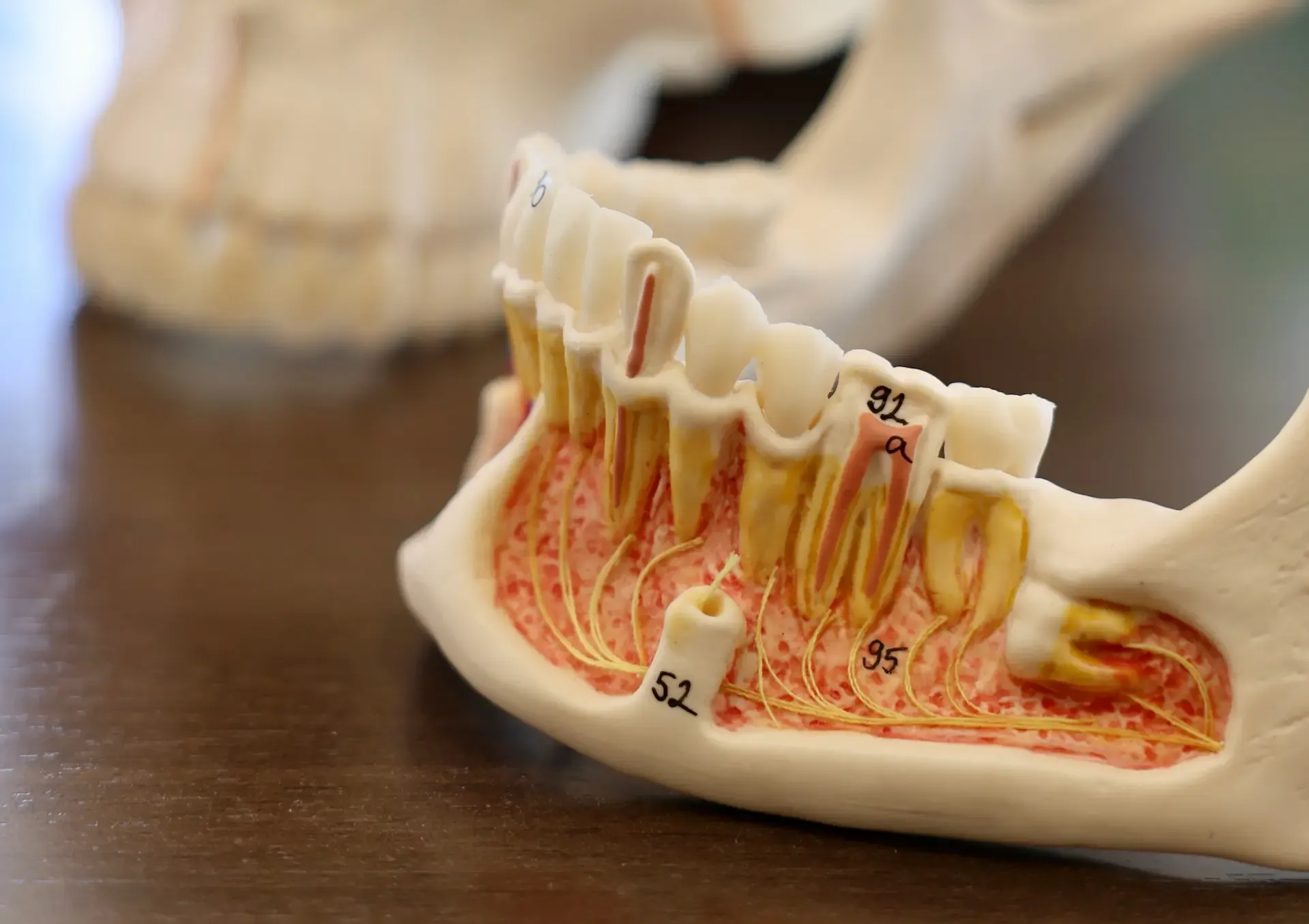
Over the years, I’ve met many patients who come into my office disappointed with their previous root canal treatment—often convinced that “root canals don’t last.” Many of them are ready to give up on saving their tooth and prefer to have it extracted and replaced with a dental implant.
However, the reality is that most root canal treatments are successful—often lasting decades when the true cause of failure is understood and properly addressed. The key is not to blame the root canal itself, but rather to identify why it failed in the first place.
Why Do Root Canals Fail?
A root canal is performed to remove infection and preserve the natural tooth structure. Once completed, the treated tooth is no longer “alive,” which means it doesn’t have the same natural defense or healing ability as a vital tooth.
This doesn’t mean it’s doomed to fail—it just means it needs a bit more protection.
Root canal teeth can fail for several reasons:
1. Unresolved infection – Sometimes, small accessory canals or missed bacteria can cause reinfection.
2. Structural weakness – A root-canaled tooth is more brittle and prone to fracture without proper restoration, such as a crown.
3. Occlusal trauma – Chronic grinding or clenching (bruxism) puts immense pressure on teeth. While a healthy, living tooth can absorb and adapt, a root-canaled tooth cannot respond as well to repeated microtrauma. Over time, this constant pressure can cause inflammation or bone loss around the root.
The Hidden Link Between Root Canals and Dental Implants
Here’s what many patients don’t realize: If the root cause—such as nighttime grinding, clenching, or chronic inflammation—isn’t managed, even a dental implant in the same area may experience similar problems later.
Implants can’t “feel” pressure either, and when subjected to the same trauma that caused the original tooth to fail, the bone around the implant may gradually resorb or fail to integrate properly.
That’s why treating the whole mouth—not just the individual tooth—is essential for long-term success.
Preventing Root Canal and Implant Problems
Modern dentistry gives us the tools to protect your investment in either treatment. Here’s how:
● Comprehensive bite analysis: Detects high spots or uneven forces that could damage your tooth or implant.
● Custom night guards: Protect against nighttime grinding and clenching, which often happen unconsciously.
● Regular maintenance and digital imaging: Helps monitor for any signs of inflammation or bone loss before symptoms appear.
● Treating inflammation early: Chronic, low-grade inflammation can silently damage teeth and bone over time—catching it early makes all the difference.
The Bottom Line
Root canal treatment is not the villain—it’s often the unsung hero that saves a tooth from extraction. When the true cause of failure is identified and addressed, root-canaled teeth can last for decades.
So before deciding to remove a tooth and replace it with an implant, make sure to have a full evaluation that looks beyond the surface. Because in dentistry, as in medicine, prevention and understanding are the best treatment.